Edgbaston Eye Clinic has offered a specialist ophthalmic laser clinic in Birmingham since 2020. The clinic provides laser treatment for selected adult patients with glaucoma, raised eye pressure and posterior capsule opacification after cataract surgery.
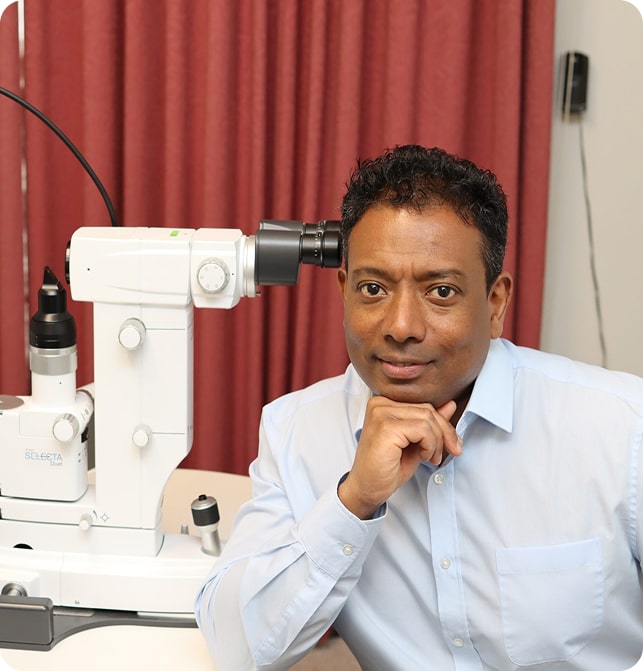
The laser clinic is led by Mr Don Williams, Advanced Clinical Practitioner in Ophthalmology at Edgbaston Eye Clinic, The Consulting Rooms, 38 Harborne Road, Edgbaston, Birmingham, B15 3HE.
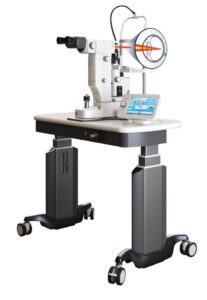
Our laser platform is the Lumenis Selecta Duet, a specialist ophthalmic laser system that provides both Selective Laser Trabeculoplasty, known as SLT, and YAG laser capsulotomy. This allows carefully selected patients to receive specialist laser care in a private clinic setting after a full clinical assessment.
Laser treatment is only recommended when it is clinically appropriate. Your consultation includes a detailed eye examination and any scans or tests deemed necessary before a decision is made.
What treatments are offered at the Laser Clinic?
The two main laser treatments associated with the clinic are:
Selective Laser Trabeculoplasty, also known as SLT, for glaucoma and raised eye pressure
YAG laser capsulotomy for posterior capsule opacification, which can occur after cataract surgery
These are different laser procedures used for different eye conditions. Your suitability depends on your diagnosis, eye pressure, examination findings, lens status, eye health, symptoms and clinical risk profile.
SLT laser for glaucoma and raised eye pressure
Selective Laser Trabeculoplasty is a laser treatment used to lower intraocular pressure in suitable patients with ocular hypertension or open-angle glaucoma.
Eye pressure can rise when the eye’s natural drainage pathway does not allow fluid to leave the eye efficiently enough. SLT applies gentle laser energy to the drainage area of the eye, called the trabecular meshwork. The aim is to improve fluid outflow and reduce eye pressure.
SLT is now widely used as a first-line treatment option for suitable patients with raised eye pressure and open-angle glaucoma. It may reduce the need for daily pressure-lowering drops, delay the need for additional medication, or help improve pressure control in patients already using drops.
At Edgbaston Eye Clinic, SLT is one of the main treatments offered within the private glaucoma clinic.
Who may be suitable for SLT?
SLT may be considered for patients with:
Ocular hypertension
Primary open-angle glaucoma
Raised intraocular pressure
Difficulty tolerating glaucoma eye drops
Poor adherence with daily glaucoma drops
Early or moderate glaucoma where laser treatment is clinically appropriate
A preference to reduce reliance on long-term pressure-lowering drops, where suitable
SLT is not suitable for every patient. A full glaucoma assessment is required first. This may include eye pressure measurement, gonioscopy to assess the drainage angle, OCT scans of the optic nerve, visual field testing, optic nerve assessment and corneal thickness measurement where clinically required.
What happens during SLT treatment?
SLT is usually performed as an outpatient laser procedure. Anaesthetic drops are used to numb the eye, and a specialist contact lens is placed on the eye to allow the drainage angle to be viewed and treated accurately.
The treatment itself is usually quick. Most patients can return home shortly afterwards. Eye pressure is checked after treatment according to the clinical protocol, and follow-up is arranged to assess the pressure-lowering response.
The effect of SLT is not always immediate. The pressure-lowering response is usually assessed over the following weeks. Some patients respond very well, while others may still require drops or further glaucoma management.
Benefits of SLT
SLT may offer several advantages in suitable patients:
It can lower eye pressure without requiring daily drops in some patients
It avoids some of the side effects associated with long-term glaucoma medication
It can be used early in the glaucoma treatment pathway
It may be repeatable in selected cases
It can be useful when eye drops are poorly tolerated or difficult to use
It is performed as an outpatient procedure
As with all treatments, SLT has risks and limitations. These are discussed during the consultation before treatment is recommended.
YAG laser capsulotomy after cataract surgery
After cataract surgery, some patients develop posterior capsule opacification, often shortened to PCO. This is sometimes called “secondary cataract”, although it is not a true cataract returning.
During cataract surgery, the cloudy natural lens is removed and replaced with a clear artificial lens implant. The thin capsule that holds the new lens in place is left behind. Over time, this capsule can become cloudy or thickened, causing vision to become misty, hazy or blurred again.
YAG laser capsulotomy uses a focused laser to create a small opening in the cloudy capsule so that light can pass more clearly to the retina.
Symptoms of posterior capsule opacification may include:
Cloudy or misty vision after cataract surgery
Glare from headlights or bright lights
Reduced contrast
Blurred reading vision
A feeling that the cataract has “come back”
Vision that was clear after cataract surgery but has gradually deteriorated
A full examination is needed to confirm that PCO is the cause of the symptoms. Other conditions, including dry eye, macular disease, glaucoma or retinal problems, can also affect vision after cataract surgery.
What happens at your laser consultation?
Your appointment is designed to confirm the diagnosis, assess suitability and explain the safest treatment pathway.
Depending on the reason for your appointment, assessment may include:
Vision testing
Eye pressure measurement
Slit-lamp examination
Dilated examination where clinically appropriate
OCT scans if needed
Optic nerve assessment
Macular assessment
Review of previous cataract, glaucoma or hospital records where available
Discussion of treatment options, risks, benefits and alternatives
Laser treatment is not performed simply because a patient requests it. It is only offered where the clinical findings support treatment and the benefits outweigh the risks.
How much does laser treatment cost?
Laser treatment at Edgbaston Eye Clinic is offered on a clear fixed-fee basis.
The fee is £575 for one eye.
This includes the consultation and any scans or tests deemed clinically necessary as part of the laser assessment and treatment pathway.
If both eyes require laser treatment, this is offered at a discounted fee.
There are no hidden costs for the consultation or clinically necessary scans linked to the laser appointment.
Why choose Edgbaston Eye Clinic for laser eye treatment in Birmingham?
Edgbaston Eye Clinic is an independent private specialist eye clinic in Birmingham led by Mr Don Williams, Advanced Clinical Practitioner in Ophthalmology.
Patients choose the clinic because:
The laser clinic has been established since 2020
SLT is one of the main treatments offered within the glaucoma clinic
The clinic uses the Lumenis Selecta Duet SLT and YAG laser platform
Patients are assessed personally by Mr Don Williams
The fee is fixed and transparent
Consultation and clinically necessary scans are included
The clinic provides private specialist care without a long wait
The service is based in Edgbaston, Birmingham, close to Harborne, Five Ways, Solihull, Sutton Coldfield and the wider West Midlands
Book a private laser consultation in Birmingham
If you have raised eye pressure, glaucoma, poor tolerance of glaucoma drops, or cloudy vision after cataract surgery, you can arrange a private laser consultation at Edgbaston Eye Clinic.