


What are Punctum Plugs?
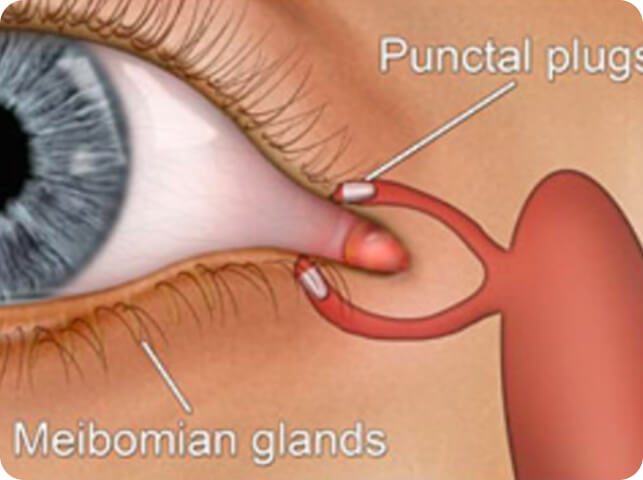
- Small devices that are use to block the tear drainage channel in the inner corner of your eye
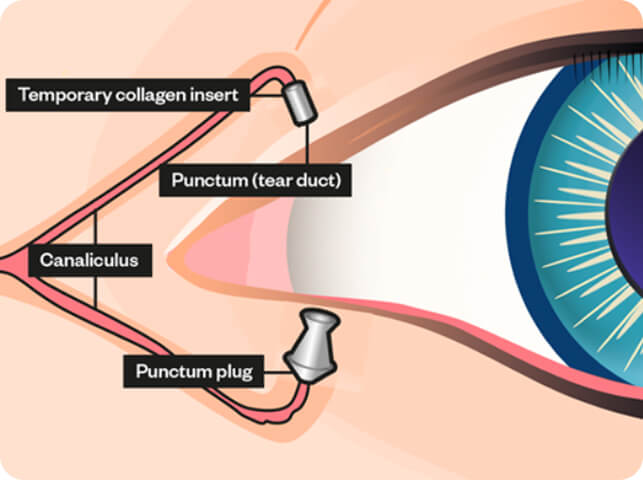
- The plugs are inserted into the tear duct opening, which is called the punctum. Tears normally drain out from this channel through the back of your nose and into the back of your throat
- Punctum Plug reduce the rate of outflow of tears. This helps keeps your eyes moist with your own tears. They can also help artificial tears last longer.
Two types of plugs
- Temporary: typically made out of collagen, a material that is found in bone and skin, dissolves over time
- Permanent: usually made out of silicone and do not dissolve but can be removed if there is a need to do so
Who Needs Punctum Plugs?
People who suffer from dry eye syndrome, particularly those whose eyes do not produce enough natural tears or whose tears evaporate too quickly, may benefit from punctum plugs. They are often recommended when lubricating eye drops or other treatments do not provide sufficient relief. Punctum plugs can also be helpful for people with certain medical conditions, such as Sjögren’s syndrome or after eye surgery, where maintaining eye moisture is especially important.
How are Punctum Plugs Inserted?
Punctum plugs can be inserted in the lower eyelid, upper eyelid, or both. This is a painless procedure. Before your eye specialist, Mr Don Williams inserts a plug, he will measure the opening of your tear duct to determine the size of plug that you will need to block your tear duct. Mr Williams will also use topical anaesthetic drops (numbing drops) before the procedure, but in many cases, anaesthesia is not needed.
You may have some mild discomfort while the punctum plugs are inserted, but it will be very brief. Most people cannot feel the plugs once they are in place. You can resume normal activities and drive yourself home immediately after the procedure.
How are Punctum Plugs removed?
Temporary plugs dissolve naturally and do not require removal. Permanent plugs do not need to be removed unless you are bothered by them or develop an infection (which is extremely rare).
Removing punctum plugs is usually a straight forward process.
Mr Don Williams has been fitting plugs for the best part of 15 years.
What are the risks of punctum plugs?
Punctal plugs rarely cause serious side effects, but they do have some risks. Possible risks include:
- The plug falling out, this is the most common problem
- Excessive tearing, the plugs can be removed if this happens
- Eye infection, the plug can be removed if this happens
- Migration of the plug, the plug would need to be removed if this happens as this can lead to an infection