Private Glaucoma Assessment and Investigation in Birmingham
Advanced testing for raised eye pressure and suspected glaucoma
Glaucoma is a group of eye conditions that can progressively damage the optic nerve and cause permanent loss of vision. The most common forms usually develop slowly and without pain, which means patients may be unaware of a problem during the early stages.
A comprehensive glaucoma assessment brings several test results together. Eye pressure alone cannot confirm or exclude glaucoma. The appearance of the optic nerve, retinal nerve fibre layer, visual field, drainage angle and central corneal thickness must all be interpreted in their proper clinical context.
At Edgbaston Eye Clinic, private glaucoma assessments are led by Mr Don Williams
Who should consider a glaucoma assessment?
A specialist glaucoma investigation may be appropriate if:
- you have been told that your eye pressure is raised
- an optometrist has identified a suspicious optic nerve or abnormal OCT scan
- you have an unusual or unreliable visual-field result
- glaucoma runs in your family
- you have been described as a glaucoma suspect
- there is a significant difference in pressure or optic-nerve appearance between your eyes
- you have ocular hypertension and require a clearer assessment of future risk
- you are already using pressure-lowering drops but are uncertain about the diagnosis or management plan
- you are seeking a private second opinion
Risk generally increases with age and is also influenced by family history, ancestry, eye pressure, corneal thickness, short-sightedness, previous eye injury, some forms of eye surgery and prolonged exposure to corticosteroids.
Click here to download the Glaucoma leaflet
What does a comprehensive glaucoma investigation include?
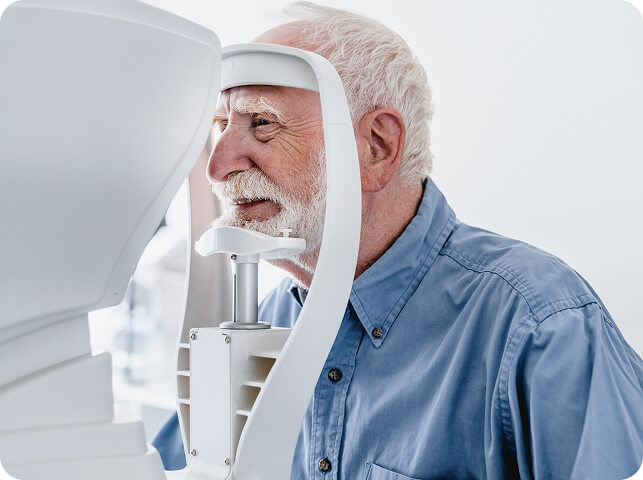
A glaucoma assessment is not based on one isolated measurement. Your results are interpreted together to establish whether there is evidence of glaucoma, ocular hypertension, a glaucoma-suspect finding or no current evidence of disease.
Your assessment may include the following tests.
Detailed clinical examination
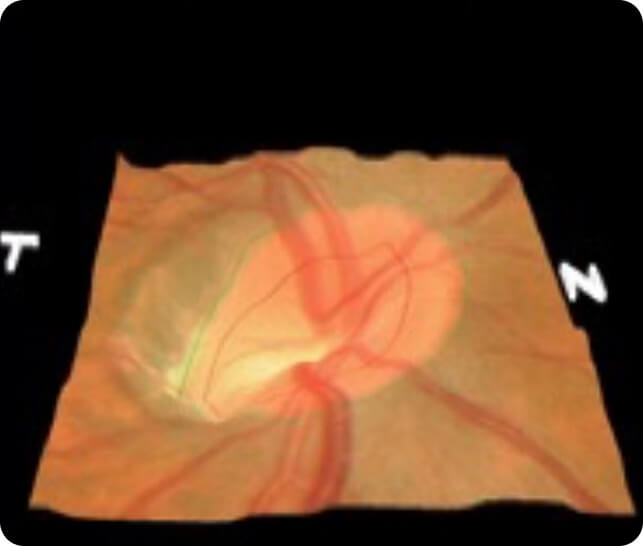
Your vision, pupils and the front and back of each eye are examined carefully. The optic nerves are assessed for features such as asymmetry, loss of neuroretinal rim tissue, disc haemorrhage or other changes that may require further investigation.
The examination also considers alternative causes of raised pressure, unusual optic-nerve appearance or visual-field loss.
Humphrey visual-field testing
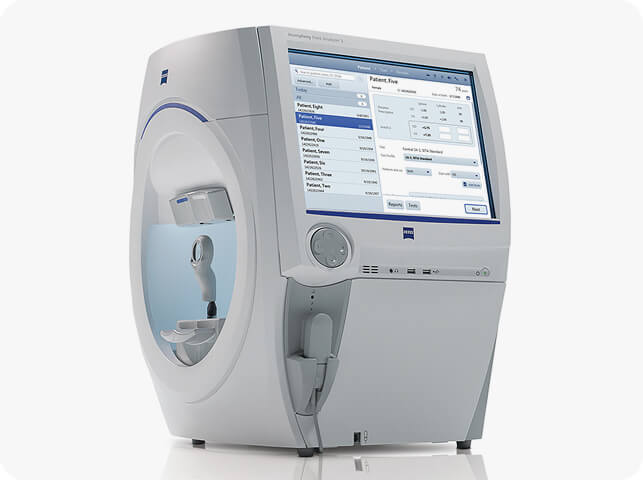
Glaucoma commonly affects peripheral vision before central reading vision. A Humphrey visual-field test looks for areas of reduced sensitivity that may not be noticeable during everyday activities.
During the test, you look at a central target and press a button whenever you see a small light. The result is analysed for patterns associated with glaucoma, including nasal steps, arcuate defects and other changes.
Visual-field testing requires concentration and can vary between appointments. An abnormal or unreliable result sometimes needs to be repeated before a conclusion can be reached.
At Edgbaston Eye Clinic, visual-field testing is performed using the Humphrey Field Analyser 3, which supports detailed assessment and future progression analysis where repeat tests are available.
Goldmann eye-pressure measurement
Intraocular pressure is measured using Goldmann applanation tonometry, the clinical reference standard for eye-pressure measurement.
A small amount of anaesthetic and fluorescein is placed into the eye before a gently illuminated instrument briefly touches the surface of the cornea. The test is quick and should not be painful.
Raised eye pressure is an important glaucoma risk factor, but it is not the same as glaucoma. Some patients have ocular hypertension without optic-nerve damage, while others develop glaucoma despite pressures that fall within the statistically usual range.
This is why pressure readings must be interpreted alongside the remainder of the examination.
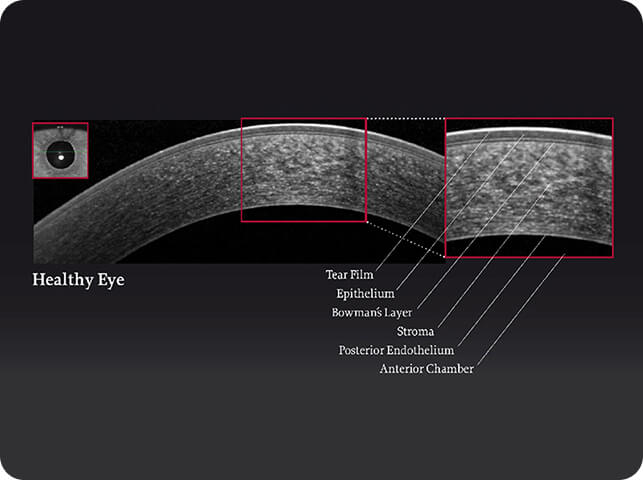
Central corneal thickness measurement
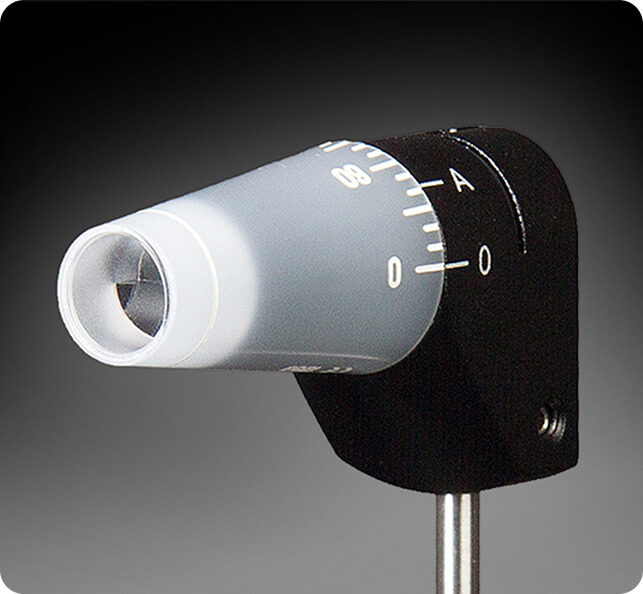
Pachymetry measures the thickness of the central cornea.
Corneal thickness can influence how an eye-pressure result is interpreted. A relatively thick cornea may contribute to a higher measured pressure, while a thin cornea may contribute to a lower reading. A thin cornea may also be an independent consideration when assessing glaucoma risk.
Pachymetry does not produce a simple “corrected” or “true” pressure. Instead, it provides important clinical context when your overall risk is assessed.
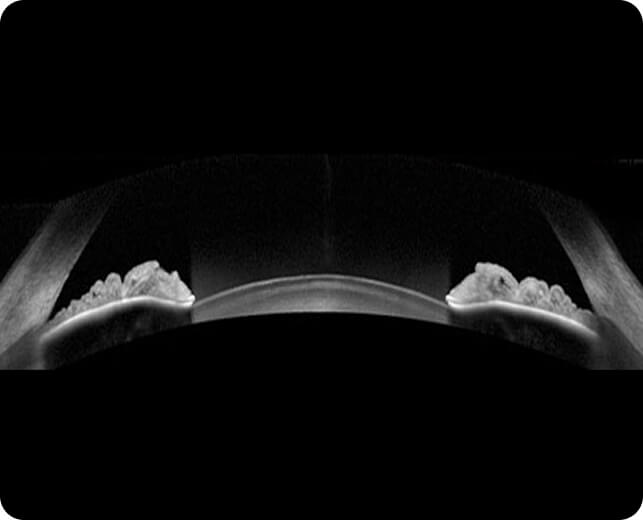
Gonioscopy of the eye’s drainage angle
Gonioscopy allows the drainage angle between the cornea and iris to be examined directly.
After the eye has been numbed with anaesthetic drops, a specialist mirrored lens is gently placed on the eye. This allows Mr Williams to determine whether the angle is open, narrow, closed or affected by abnormalities such as pigment, peripheral anterior synechiae, inflammation or abnormal blood vessels.
This is essential because open-angle and angle-closure forms of glaucoma require different approaches to investigation and management.
Where appropriate, video gonioscopy may be used to document the drainage-angle findings and explain them to you.
Advanced OCT glaucoma imaging
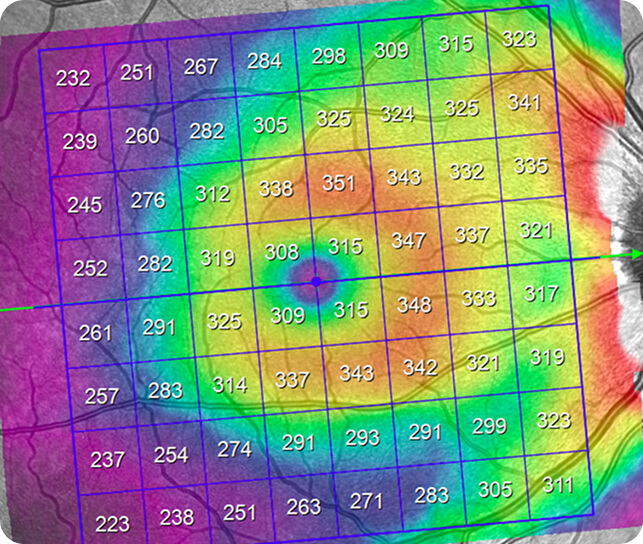
Optical coherence tomography provides detailed, non-invasive imaging of the optic nerve and the retinal structures affected by glaucoma.
Edgbaston Eye Clinic uses the Heidelberg Spectralis Glaucoma Module Premium Edition, also known as GMPE. Depending on the clinical question, the assessment may include:
- retinal nerve fibre layer analysis
- Bruch’s membrane opening minimum rim width analysis
- macular ganglion-cell assessment
- comparison with an age-related reference database
- assessment of asymmetry between the eyes
- progression analysis when sufficient previous scans are available
OCT can identify structural findings that may support a diagnosis of glaucoma, but the scan must not be interpreted in isolation. Image quality, optic-disc size, short-sightedness, anatomical variation and retinal conditions can all affect the result.
Every scan is therefore interpreted alongside your eye pressure, visual field, gonioscopy, corneal thickness and clinical examination.
Optic-nerve and retinal imaging
Baseline images of the optic nerves can help document their appearance and allow meaningful comparison over time.
Where clinically appropriate, Optos ultrawide-field imaging may also be used to assess the wider retina. This can help identify retinal findings that may influence symptoms, visual-field results or the wider management plan.
Optos imaging supports the glaucoma assessment but does not replace detailed optic-nerve examination, OCT or visual-field testing.
Will I be told the results at the appointment?
Yes. Your findings will be interpreted and explained in understandable language.
At the end of the assessment, you should have a clearer understanding of whether:
- there is no current evidence of glaucoma
- you have ocular hypertension
- you are a glaucoma suspect
- further or repeat testing is needed
- glaucoma is present
- an existing condition appears stable or requires a change in management
You will also be shown relevant scans or test results where this helps explain the findings.
What happens if glaucoma or ocular hypertension is identified?
If glaucoma or ocular hypertension is identified, Mr Williams will explain the severity of the findings, your likely level of risk and the available management options.
Depending on the results, recommendations may include observation, repeat testing, pressure-lowering eye drops, selective laser trabeculoplasty or referral for ophthalmological or surgical care.
For information about long-term monitoring and treatment, please visit our glaucoma eye care and management page.
Is this the same as a routine eye examination?
No. A specialist glaucoma assessment is more detailed and is designed specifically to investigate raised eye pressure, suspected optic-nerve damage, abnormal visual fields and other glaucoma-related concerns.
It does not replace routine spectacle care, but it provides a much deeper assessment of glaucoma risk and optic-nerve health.
Why choose Edgbaston Eye Clinic for glaucoma investigation?
Your assessment is led by Mr Don Williams an Advanced Clinical Practitioner in Ophthalmology
Mr Williams previously worked as part of the glaucoma team at Birmingham and Midland Eye Centre and has extensive experience in the investigation and management of glaucoma, ocular hypertension and complex glaucoma-suspect findings.
Edgbaston Eye Clinic was established in 2017 by Mr don williams. Edgbaston Eye Clinic is located on 38 Harborne Road, Edgbaston, Birmingham, B15 3HE.
Book a private glaucoma assessment in Birmingham
A specialist glaucoma assessment can provide clarity if you have raised eye pressure, suspicious test results, a family history of glaucoma or concerns about your current diagnosis.
To request an appointment, complete our online appointment form, on info@edgbastoneyeclinic.com or telephone 0121 726 3199.