


Cataracts
Cataracts are a very common eye condition that affects most people at some point in their lives.
A cataract occurs when the natural lens inside the eye gradually becomes misty with age. Cataracts are usually progressive and naturally get worse over time. Eyesight will deteriorate as the cataract progresses.
Click here to download the Cataract leaflet
Causes and Risk Factors
Even though age is the most accepted risk factor for cataracts, some children are unfortunate enough to be born with cataracts, known as congenital cataracts. Some people also develop cataracts more quickly due to an injury or medical conditions such as diabetes, or as a side effect of certain medications such as long-term steroid use.
It is not entirely clear why we are more likely to develop cataracts as we get older, but several factors may increase your risk, including:
- Family history of cataracts
- Smoking
- Diabetes
- Eye injury
- Long-term steroid use
- Excessive alcohol consumption
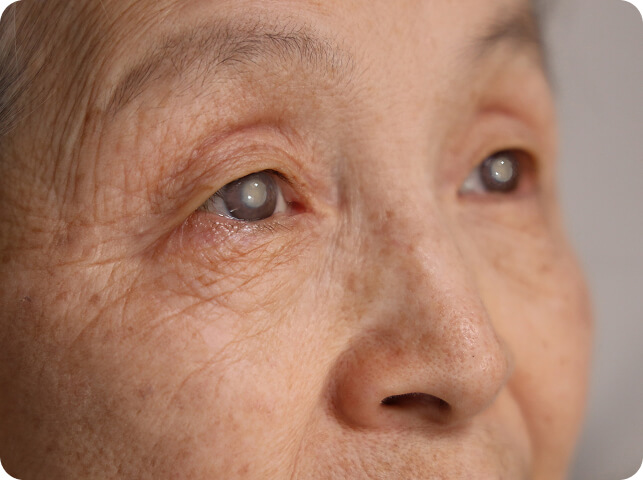

Early Symptoms
Initially, you may notice subtle changes in your vision, such as difficulty with reading or seeing captions on television. You may also experience increased glare on bright days or when driving at night.
It is not uncommon to be told you have “early cataracts” or “lens opacities” for many years before you notice any effect from them.
When your cataract starts to develop, you may feel your sight is changing or not as good as it once was. Some people describe it as looking through dirty spectacles lenses. You may also notice that colours appear less bright and that glare, especially at night, becomes more pronounced.
Cataracts are mainly age-related; however, they can also affect babies and young children. A full assessment for cataract including clinical examination at Edgbaston Eye Clinic and scans is £350.
Treatment: Cataract Surgery
Surgery is the only way to treat cataracts. Cataract surgery involves replacing the cloudy lens inside your eye with an artificial clear lens.
Cataract surgery is the most common operation performed in the UK and has a very high success rate in improving eyesight. It can take 4–6 weeks to fully recover from cataract surgery. The procedure is fairly straightforward and usually takes about 30 minutes. It is often carried out as day surgery under local anaesthetic, and you should be able to go home on the same day.
After cataract surgery, you should be able to see things in focus again, experience minimal glare, and have better colour vision.
The risk of serious complications developing as a result of cataract surgery is very low. There is a small risk, about 1 in 1,000, of permanent sight loss in the treated eye as a direct result of the operation.
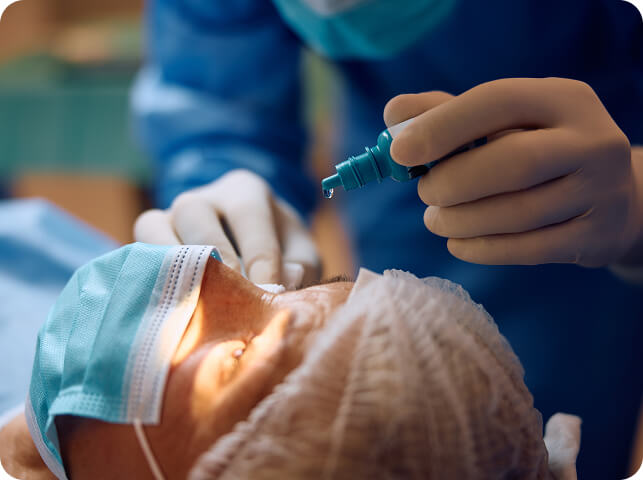
What to expect after cataract surgery
Most patients notice clearer, brighter vision after cataract surgery, although it is normal for the eye to feel slightly gritty, watery or sensitive for a short period while it heals. Vision may continue to settle over the following days to weeks and prescribed post-operative eye drops are usually used to control inflammation and reduce the risk of infection.
Posterior capsular opacification (PCO) after cataract surgery
A common late complication after cataract surgery is posterior capsular opacification, often called PCO. This happens when the thin membrane behind the lens implant becomes cloudy, causing the vision to become blurred, hazy or misty again, sometimes months or years after otherwise successful cataract surgery.
Treatment with YAG Laser Capsulotomy
PCO is not the cataract “coming back”. It is usually treated with a quick outpatient laser procedure called YAG laser capsulotomy. This creates a small opening in the cloudy capsule behind the lens implant, allowing light to pass through clearly again and often improving vision rapidly.
At Edgbaston Eye Clinic, 38 Harborne Road, B15 3HE, Birmingham, Mr Don Williams can assess blurred vision after cataract surgery and advise whether PCO is present and whether YAG laser capsulotomy may be appropriate. Typical cost for YAG Laser capsulotomy including all tests an examination is £575 per eye or £1100 for both eyes.