


Specialist Glaucoma Care in Birmingham
Glaucoma refers to a group of eye conditions that progressively damage the optic nerve, which carries visual information from the eye to the brain.
The most common forms of glaucoma develop slowly, without pain and without noticeable symptoms during the early stages. Peripheral vision is usually affected first, which means significant damage may occur before a person becomes aware of any change.
Although vision already lost through glaucoma cannot be restored, early diagnosis, regular monitoring and effective treatment can help slow or prevent further damage. Most people who are diagnosed and treated appropriately retain useful vision throughout their lives.
Edgbaston Eye Clinic provides specialist private glaucoma care in Birmingham, led by Mr Don Williams, Advanced Clinical Practitioner in Ophthalmology
Click here to download the Glaucoma leaflet
What is glaucoma?
Glaucoma develops when the optic nerve becomes progressively damaged.
Raised pressure inside the eye is the most important modifiable risk factor, but glaucoma is not caused by eye pressure alone. Some patients develop optic nerve damage despite pressure readings within the statistically usual range, while others have raised pressure without any detectable nerve damage.
Glaucoma assessment and management therefore consider several factors, including:
- eye pressure
- the appearance of the optic nerve
- retinal nerve fibre layer health
- visual-field results
- the structure of the eye’s drainage angle
- central corneal thickness
- age and family history
- short-sightedness
- ancestry and other individual risk factors
Why is early detection important?
Damage caused by glaucoma is permanent. Treatment cannot restore optic nerve fibres that have already been lost, but it can reduce the risk of further deterioration.
Because chronic glaucoma is usually painless and symptom-free during its early stages, routine eye examinations are essential. Specialist investigation may be recommended if raised eye pressure, suspicious optic nerves, abnormal OCT scans or unusual visual-field findings are identified.
Patients with recognised risk factors may also benefit from closer observation, even when there is no definite evidence of glaucoma.
What symptoms can glaucoma cause?
Most people with early open-angle glaucoma have no symptoms.
As the condition progresses, patients may develop areas of missing peripheral vision. In advanced glaucoma, the visual field may become severely restricted and central vision can eventually be affected.
Symptoms such as misty vision, coloured haloes around lights, significant eye pain, redness, headache, nausea or vomiting are not typical of slowly developing open-angle glaucoma. They may indicate acute angle closure or another urgent eye condition and require immediate assessment.
When is glaucoma an emergency?
Seek urgent eye-care assessment if you develop:
- sudden severe eye pain
- a red eye with blurred or misty vision
- coloured haloes around lights
- headache with nausea or vomiting
- sudden loss of vision
- marked tenderness around the eye
Acute angle-closure glaucoma can cause a rapid and significant rise in eye pressure. It is uncommon, but it requires urgent treatment to protect the optic nerve and vision.
What are the main types of glaucoma?
Primary open-angle glaucoma
Primary open-angle glaucoma is the most common form in the UK. The drainage angle remains physically open, but fluid does not leave the eye efficiently enough or the optic nerve becomes vulnerable to the existing level of pressure.
It usually develops gradually and without noticeable early symptoms.
Normal-tension glaucoma
In normal-tension glaucoma, characteristic optic nerve and visual-field damage develops even though recorded eye pressure does not appear unusually high.
This does not mean pressure is unimportant. Lowering eye pressure can still reduce the risk of further progression.
Angle-closure glaucoma
Angle-closure glaucoma occurs when the drainage angle between the iris and cornea becomes narrow or closed.
It may develop slowly or present suddenly with pain, redness, blurred vision, coloured haloes, headache and nausea. Gonioscopy is required to evaluate the drainage angle accurately.
Secondary glaucoma
Secondary glaucoma develops because of another eye condition, injury, surgery, inflammation, abnormal blood vessels or medication use.
Corticosteroid eye drops, tablets, inhalers, nasal sprays, skin preparations and joint injections can raise eye pressure in susceptible individuals.
Childhood or developmental glaucoma
These are uncommon forms associated with abnormal development of the eye’s drainage system. They are managed within specialist hospital ophthalmology services.
What is ocular hypertension?
Ocular hypertension means that the pressure inside the eye is higher than expected, but there is no detectable glaucomatous damage to the optic nerve or visual field.
Not everyone with ocular hypertension develops glaucoma. Treatment decisions depend on the level of pressure, age, corneal thickness, family history, life expectancy and the estimated lifetime risk of developing sight-threatening disease.
Some patients require observation only, while others may benefit from pressure-lowering eye drops or selective laser trabeculoplasty.
What does it mean to be a glaucoma suspect?
A glaucoma suspect is someone who has one or more findings that could indicate an increased risk of glaucoma, but does not yet meet the criteria for a definite diagnosis.
This may include:
- raised eye pressure
- asymmetrical or unusual optic nerves
- a suspicious OCT scan
- an uncertain visual-field result
- a strong family history
- a narrow drainage angle
- pigment dispersion or pseudoexfoliation
- previous steroid-related pressure elevation
Glaucoma-suspect findings often require repeat testing over time. Stability or progression can be more informative than one isolated result.
Risk Factors for Glaucoma
Age: Primary open-angle glaucoma becomes much more common with increasing age. It is uncommon below 40, but the number of people with the condition rises from about 2% over 40 to more than 5% over 80.
Blood Pressure: People with low blood pressure in relation to eye pressure are at greater risk. Your specialist may review your blood pressure treatment if necessary.
Ethnicity: People of African-Caribbean origin are at four times greater risk of developing primary open-angle glaucoma compared to those of European origin. People of Asian origin are at an increased risk of developing primary angle-closure glaucoma.
Family History: Having a close blood relative with glaucoma increases your risk. Eye examinations are funded by the NHS for people over 40, but earlier testing is recommended if you have a family history or other risk factors.
Refractive Errors: Short-sightedness (myopia) increases the risk of glaucoma, while long-sightedness (hyperopia) increases the risk of angle-closure glaucoma.
Diabetes: People with diabetes may be at increased risk, although a direct link is unclear. Regular eye examinations are recommended.
Do I need a glaucoma investigation?
A comprehensive glaucoma investigation may be appropriate if:
- you have been told your eye pressure is raised
- an optometrist has identified a suspicious optic nerve
- your OCT scan or visual-field result is abnormal
- glaucoma runs in your family
- you have been described as a glaucoma suspect
- you have ocular hypertension
- you are using glaucoma drops but remain uncertain about the diagnosis
- you would like a private second opinion
Glaucoma cannot be diagnosed or excluded using eye pressure alone.
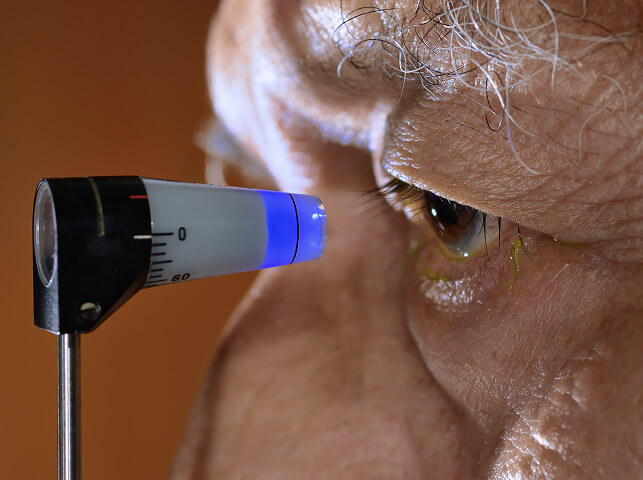
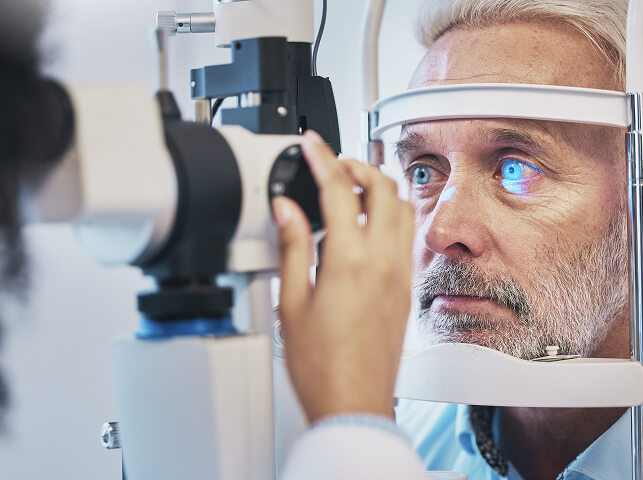
A full investigation may include Goldmann eye-pressure measurement, gonioscopy, central corneal thickness measurement, Humphrey visual-field testing and advanced OCT analysis of the optic nerve and retinal nerve fibre layer.
For detailed information about these tests, please visit our Glaucoma Investigation Birmingham page.
How is glaucoma treated?
Glaucoma treatment aims to reduce eye pressure to a level at which further optic nerve damage is less likely.
The recommended treatment depends on the type of glaucoma, the extent of existing damage, eye pressure, age, rate of progression and individual risk factors.
Monitoring without immediate treatment
Some patients with ocular hypertension or glaucoma-suspect findings may not need treatment straight away.
Regular monitoring allows changes in eye pressure, optic nerve structure, OCT measurements and visual-field function to be identified over time.
Glaucoma eye drops
Pressure-lowering eye drops reduce the production of fluid within the eye or improve fluid drainage.
Several classes of glaucoma medication are available. The most suitable option depends on the required pressure reduction, other medical conditions, potential side effects and how easily the treatment can be used consistently.
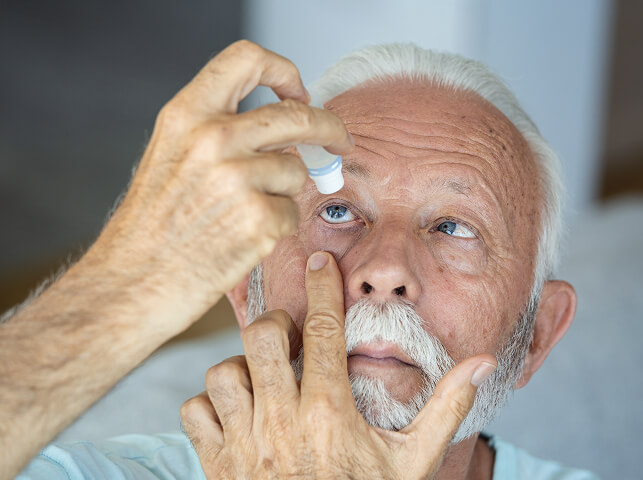
Correct drop technique and long-term adherence are essential. A treatment cannot protect the optic nerve if it is not reaching the eye regularly.
Selective laser trabeculoplasty
Selective laser trabeculoplasty, commonly called SLT, treats the eye’s natural drainage system to help fluid leave the eye more efficiently.
SLT may be used as an alternative to eye drops or alongside existing medication in suitable patients with open drainage angles.
The treatment does not involve surgical cuts or stitches. Its suitability depends on the type of glaucoma, drainage-angle findings, previous treatment and the pressure reduction required.
For more information, please visit our SLT Laser Treatment for Glaucoma page.
Glaucoma surgery
Some patients require glaucoma surgery when eye drops and laser treatment do not reduce pressure sufficiently or when the condition is advanced.
Surgical options include trabeculectomy, glaucoma drainage devices and a range of minimally invasive glaucoma procedures. Where surgery is required, an appropriate referral can be arranged to a consultant glaucoma surgeon.
How is glaucoma monitored?
Glaucoma monitoring is designed to determine whether the condition is stable or progressing.
Follow-up may include:
- Goldmann eye-pressure measurement
- optic nerve examination
- OCT imaging
- retinal nerve fibre layer analysis
- macular ganglion-cell analysis
- Humphrey visual-field testing
- gonioscopy where indicated
- review of treatment and drop technique
- assessment of side effects and adherence
The frequency of monitoring depends on the severity of glaucoma, eye pressure, previous progression, treatment and the reliability of earlier test results.
Patients with advanced or rapidly progressing glaucoma generally require closer follow-up than those with stable ocular hypertension or low-risk glaucoma-suspect findings.
Can glaucoma be cured?
Glaucoma cannot currently be cured, and vision already lost cannot be restored.
However, glaucoma can usually be managed. Reducing eye pressure and monitoring the optic nerve carefully can significantly lower the risk of further sight loss.
The aim is to protect useful vision throughout the patient’s lifetime rather than simply achieve a pressure reading within a general “normal” range.
Can glaucoma make me blind?
Glaucoma can cause severe visual impairment if it is diagnosed late, progresses rapidly or is not adequately treated.
However, blindness is not inevitable. Most patients who are diagnosed in time, attend regular monitoring and use treatment consistently retain useful vision.
The risk differs considerably between patients. Someone with mild, stable glaucoma has a very different outlook from a patient with advanced disease, very high pressure or rapid progression.
Is glaucoma inherited?
Glaucoma can run in families.
Having a parent, brother, sister or child with glaucoma increases your risk, although it does not mean you will definitely develop the condition.
In England, people aged 40 or over may qualify for an NHS-funded sight test if a parent, sibling or child has been diagnosed with glaucoma. Earlier or more detailed testing may still be recommended where other risk factors are present.
Can lifestyle changes prevent glaucoma?
There is no lifestyle change that can reliably prevent or cure glaucoma.
General measures that support overall health remain sensible, including regular physical activity, avoiding smoking, maintaining cardiovascular health and taking prescribed medication correctly.
Patients with glaucoma should discuss major changes in medication, intensive inverted exercise or prolonged corticosteroid use with an appropriate clinician.
Lifestyle measures should support, not replace, prescribed glaucoma treatment and monitoring.
Why choose Edgbaston Eye Clinic for glaucoma care?
Glaucoma care at Edgbaston Eye Clinic is led by Mr Don Williams Advanced Clinical Practitioner in Ophthalmology.
Mr Williams previously worked as part of the glaucoma team at the Birmingham and Midland Eye Centre and has extensive experience in glaucoma, ocular hypertension, glaucoma-suspect findings and early or pre-perimetric disease.
Specialist care at the clinic includes ongoing monitoring, review and prescribing of glaucoma medication, assessment of treatment response, selective laser trabeculoplasty where appropriate, and referral for consultant ophthalmological or surgical care when required.
Advanced glaucoma technology is used to support careful monitoring of eye pressure, optic nerve structure and visual function over time. Further information about the diagnostic tests available can be found on our Glaucoma Investigation Birmingham page.
The emphasis at Edgbaston Eye Clinic is on careful clinical interpretation, patient safety, clear explanation of treatment choices and preserving vision through individualised, evidence-based care.
Glaucoma assessment fees
A comprehensive private glaucoma assessment, including the consultation and all the relevant tests including eye scans at Edgbaston Eye Clinic costs £425 and normally takes approximately one hour.
The assessment includes the specialist examination and diagnostic testing required to evaluate the optic nerves, eye pressure, visual fields and glaucoma risk. Additional or repeat investigations may occasionally be recommended depending on the findings.
For a detailed explanation of the diagnostic tests, please visit our Glaucoma Investigation Birmingham page.
Where is Edgbaston Eye Clinic?
Edgbaston Eye Clinic is an independent private specialist eye clinic in Birmingham.
The clinic is based at:
38 Harborne Road
Edgbaston
Birmingham B15 3HE
Book specialist glaucoma care in Birmingham
If you have glaucoma, ocular hypertension, suspicious optic nerves or concerns about your current treatment, you can request a specialist appointment at Edgbaston Eye Clinic.
Complete our online appointment request form, info@edgbastoneyeclinic.com or telephone 0121 726 3199.