


Age-Related Macular Degeneration (AMD)
If you are looking for a dry AMD specialist in Birmingham, Edgbaston Eye Clinic provides comprehensive private macular assessments, including specialist consultation, retinal examination and advanced diagnostic scans.
Age-Related Macular Degeneration (AMD) is the leading cause of sight loss in the UK.
View the Dry Age Related Macular the leaflet here
Dry Age-Related Macular Degeneration
Age-related macular degeneration, commonly known as AMD, is a condition affecting the macula, the central part of the retina responsible for detailed vision.
AMD is one of the leading causes of sight loss in the UK. It usually develops after the age of 50 and can affect one or both eyes. Although AMD does not normally cause complete blindness, it can make reading, driving, recognising faces and carrying out other detailed visual tasks increasingly difficult.
At Edgbaston Eye Clinic, 38 Harborne Road, Edgbaston, Birmingham, B15 3HE, Mr Don Williams provides comprehensive private macular assessments for people who have been diagnosed with AMD, have a family history of the condition or are concerned about changes in their central vision.
What Is Age-Related Macular Degeneration?
The macula is the specialised central area of the retina that allows you to see fine detail, colours and faces clearly.
AMD causes changes within the macula. These changes may develop slowly over several years or, in some cases, progress much more rapidly.
There are two principal forms of age-related macular degeneration:
- Dry age-related macular degeneration
- Wet age-related macular degeneration
Some people with dry AMD can later develop wet AMD. This is why monitoring and reporting any sudden change in vision are important.
Dry Age-Related Macular Degeneration
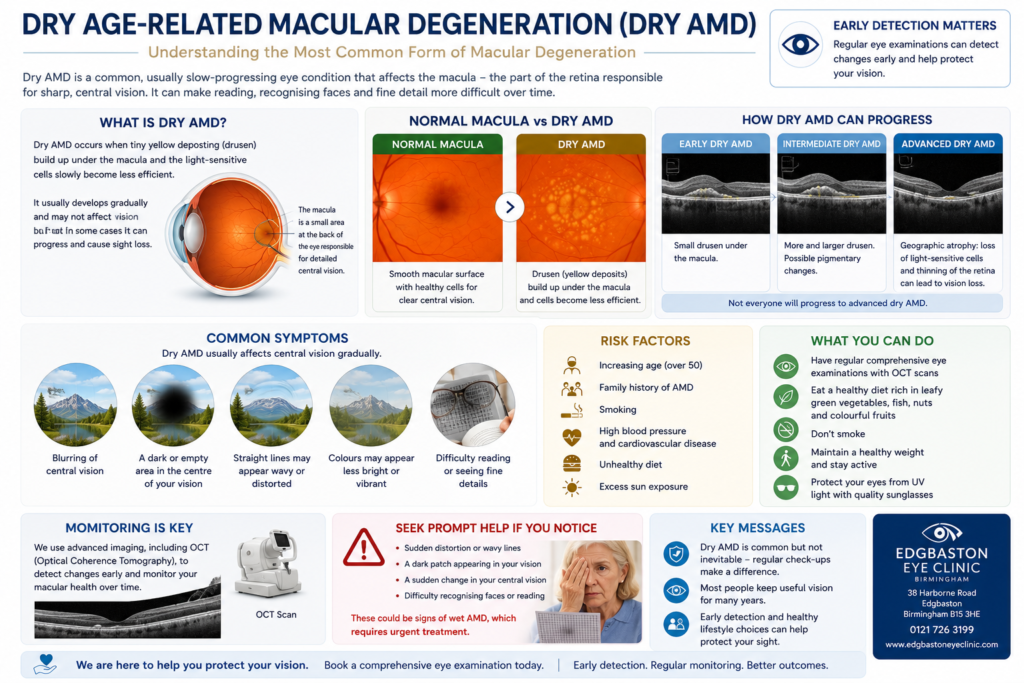
Dry AMD is the more common form of macular degeneration. It usually develops gradually as cells within the macula become damaged and stop functioning normally.
Small deposits called drusen may accumulate beneath the retina. In more advanced dry AMD, areas of retinal tissue can become progressively thinner. This advanced stage is known as geographic atrophy.
Dry AMD may cause:
- Gradually blurred central vision
- Increasing difficulty reading small print
- A need for brighter lighting
- Reduced contrast sensitivity
- Colours appearing less vivid
- Difficulty recognising faces
- Dark, blurred or missing areas in the centre of vision
The rate of progression varies considerably. Some people experience relatively little change for many years, while others develop more significant central visual loss.
There is currently no treatment that can restore retinal cells or vision already lost through dry AMD in routine UK clinical practice. Regular assessment can identify progression, detect signs of wet AMD and help determine whether nutritional supplements or additional support may be appropriate.
Private Macular Degeneration Assessment in Birmingham
A comprehensive AMD assessment at Edgbaston Eye Clinic costs £425 and includes a specialist consultation and the necessary diagnostic scans.
Depending on your symptoms and clinical findings, your assessment may include:
- A detailed review of your symptoms, general health and family history
- Measurement of your distance and near vision
- Examination of the macula and retina
- Pupil dilation where clinically required
- Optical coherence tomography, known as an OCT scan
- Retinal photography or ultra-widefield retinal imaging where appropriate
- Comparison with previous scans, when available
- Assessment for dry AMD, wet AMD, drusen or geographic atrophy
- A personalised monitoring and management plan
- Advice about diet, lifestyle and nutritional supplements
- Urgent referral to a retinal specialist or hospital eye service if wet AMD is suspected
High density OCT scanning, available at Edgbaston Eye clinic, provides detailed cross-sectional images of the retina. It can help identify drusen, thinning of the retinal layers, fluid, bleeding and other structural changes associated with macular disease.
Who Should Consider a Macular Assessment?
You may benefit from an assessment if:
- You have previously been diagnosed with dry AMD
- AMD runs in your family
- An optometrist has identified drusen or macular changes
- Your central vision has become blurred
- Straight lines appear distorted or wavy
- Reading or recognising faces has become more difficult
- You have noticed a difference between your two eyes
- You would like a specialist second opinion
- You need detailed scans to monitor an existing macular condition
AMD can sometimes be detected during an eye examination before noticeable symptoms develop. People with known macular changes may therefore require regular monitoring even when their vision appears stable.
Can the Progression of AMD Be Slowed?
There is no guaranteed way to prevent AMD. However, several measures may support general eye health and reduce potentially modifiable risks.
Stop Smoking
Smoking is an important modifiable risk factor for AMD. Stopping smoking is one of the most helpful steps a person can take for both their eye health and wider health.
Follow a Balanced Diet
A varied diet containing green leafy vegetables, fruit, vegetables, fish, nuts and other sources of antioxidants may support retinal and cardiovascular health.
Dietary changes cannot reverse existing macular damage, but good nutrition remains an important part of maintaining overall health.
Look After Your General Health
High blood pressure, excess weight and smoking have been associated with AMD. Maintaining a healthy weight, remaining physically active and ensuring that blood pressure and cardiovascular conditions are appropriately managed may be beneficial.
Monitor Your Vision
People with AMD may be advised to compare the vision in each eye separately and to report new distortion, blurring or missing areas promptly.
An Amsler grid may be recommended for home monitoring, but it does not replace professional eye examinations or OCT scans.
Should I Take Eye Supplements for AMD?
Nutritional supplements are not suitable or necessary for everyone with AMD.
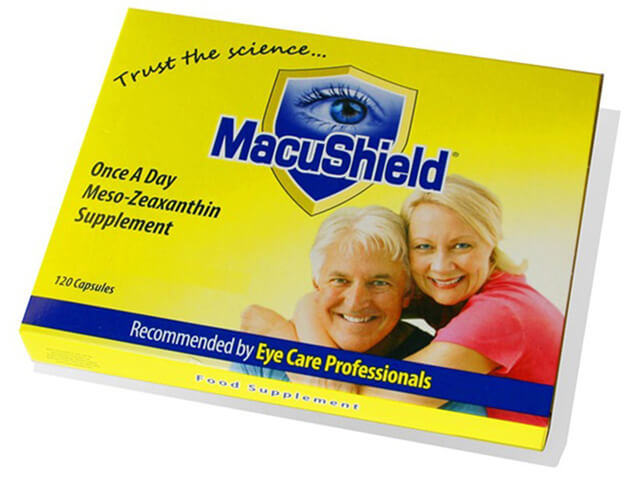
The Age-Related Eye Disease Studies found that a specific combination of vitamins and minerals, known as the AREDS2 formulation, can reduce the risk of progression in certain people with intermediate AMD or advanced AMD affecting one eye.
AREDS2 supplements:
- Do not prevent AMD from developing
- Are not normally recommended solely because someone has a family history
- Do not restore vision that has already been lost
- May not benefit people with early AMD
- Contain high doses of vitamins and minerals that may interact with medicines
Current and former smokers should avoid older formulations containing beta-carotene because of an associated increase in lung cancer risk. The newer AREDS2 formulation replaces beta-carotene with lutein and zeaxanthin.
We recommend having the stage of your macular condition assessed before purchasing supplements. Your medical history, smoking history and current medication should also be considered.
Mr Don Williams, Advanced Clinical Practitioner in Ophthalmology and Director of Edgbaston Eye Clinic, provides specialist assessment for the early detection and monitoring of age-related macular degeneration at 38 Harborne Road, Edgbaston, Birmingham, B15 3HE. Mr Don Williams is an expert at the early detection of age related macular disease.