


SLT Laser Treatment in Birmingham — Selective Laser Trabeculoplasty
Selective laser trabeculoplasty (SLT) is a quick, low-energy laser procedure that lowers eye pressure in people with glaucoma or ocular hypertension. Edgbaston Eye Clinic provides SLT at The Consulting Rooms, 38 Harborne Road, Edgbaston, Birmingham, B15 3HE. The procedure is performed by Mr Don Williams, an Advanced Clinical Practitioner in Ophthalmology with specialist glaucoma registration and 15 years' experience in the Hospital Eye Service, including the glaucoma department at Birmingham and Midland Eye Centre.
SLT takes around 10 minutes, typically lowers eye pressure by 20 to 30%, and is recommended in NICE guidance (NG81) as a first-line treatment option for eligible patients with newly diagnosed ocular hypertension or chronic open-angle glaucoma. It can be used on its own, alongside eye drops, or as an alternative when drops are poorly tolerated, and the treatment can be repeated if its effect wears off over time.
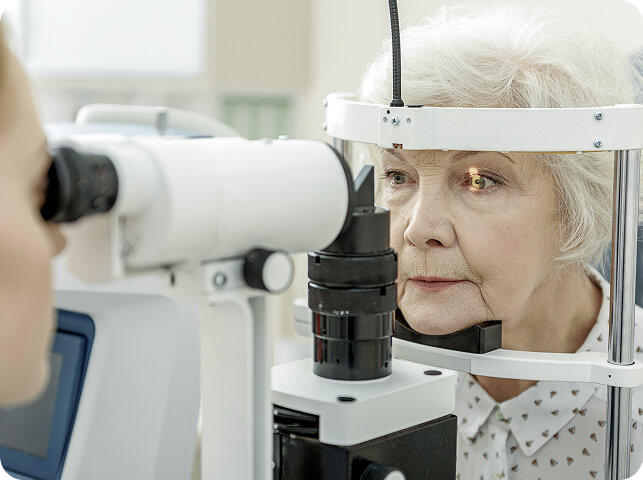
How does SLT work?
Fluid inside the eye drains away through a fine sieve-like structure called the trabecular meshwork, which sits around the edge of the iris, the coloured part of the eye. In glaucoma and ocular hypertension, this drainage does not work efficiently, and pressure builds up inside the eye. SLT treats the trabecular meshwork directly to improve drainage.
SLT uses short pulses of relatively low-energy light that target only the melanin-rich cells in the drainage channel. The surrounding tissue is left unaffected — this is what makes the treatment "selective" and gentle. The laser triggers a natural biological response in which the body's own white cells clear the treated cells and remodel the meshwork so that it drains more effectively, lowering the eye pressure.
Because SLT works with the eye's own healing response rather than burning or cutting tissue, it can be repeated more than once if needed.
What are the benefits of SLT?
- Lowers raised eye pressure without the side effects or daily difficulty of eye drops
- Particularly suitable for patients who cannot use, or are intolerant of, glaucoma drops
- Can be used alongside medication to enhance the overall pressure-lowering effect
- Typically lowers eye pressure by 20 to 30%, and is successful in around 80% of patients
- The effect commonly lasts 3 to 5 years, and the treatment can be repeated
- Supported by long-term evidence: the landmark LiGHT trial found SLT to be a safe and effective first-line treatment for glaucoma and ocular hypertension

What happens during the SLT procedure?
- Anaesthetic drops are used to numb the front of the eye — the treatment itself is not painful.
- A special contact lens is placed gently against the front surface of your eye. This is not painful, but it can feel a little strange.
- During treatment you may see some flashes of light and hear a soft clicking sound.
- The procedure takes about 10 minutes.
- Your eye pressure is checked before you leave the clinic.
- A follow-up appointment is arranged, usually one to two weeks later.
- The full pressure-lowering effect can take up to eight weeks to develop, so your response is reviewed over the following weeks.
You can go home the same day. Most people notice little more than mildly blurred vision for a few hours afterwards.
What are the risks and side effects of SLT?
SLT is regarded as a very safe procedure, but like all treatments it carries some potential side effects:
- Blurred vision for a few hours after treatment, which settles on its own.
- Mild inflammation in the eye, which usually resolves quickly. Anti-inflammatory (steroid) drops are sometimes provided after treatment.
- A temporary rise in eye pressure shortly after the procedure. To reduce this risk, special pressure-lowering drops are given before the laser, and your pressure is checked before you go home. Occasionally extra glaucoma drops are prescribed for a short period afterwards.
- Rarely, the pressure rises significantly and does not settle with drops. In this very unusual situation, surgery may be required to lower the pressure.
The risk of your vision being permanently affected by SLT is extremely low. You will be given clear advice on what to expect after treatment, and how to contact the clinic promptly if you have concerns between appointments.