


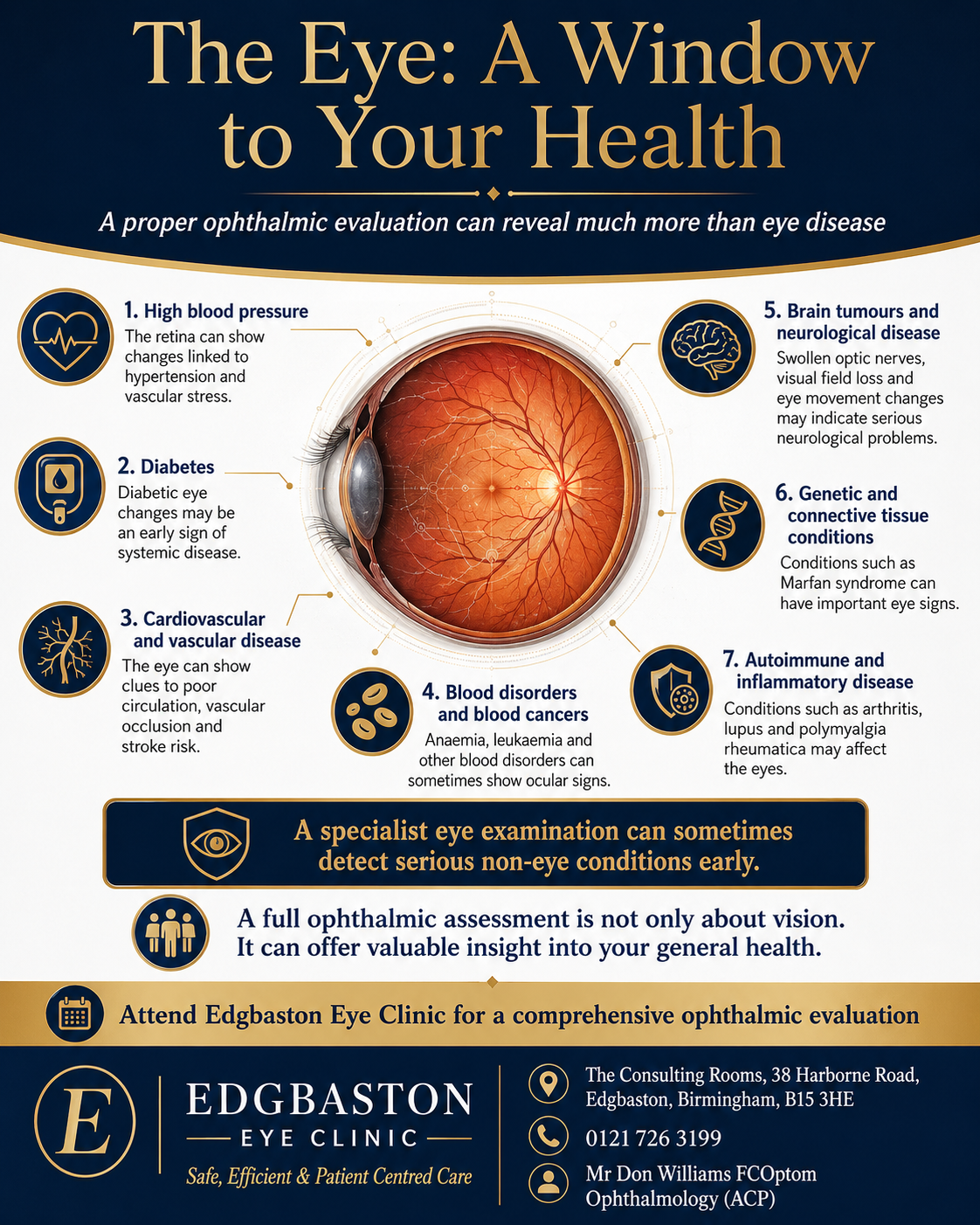
The eye can reveal more than eye disease
A proper ophthalmic evaluation is not only about checking vision. The eye is one of the few places in the body where blood vessels, nerves and connective tissues can be examined directly, which means a detailed eye assessment can sometimes reveal important signs of general health problems.
Over a clinical career spanning more than 20 years, Mr Don Williams has seen how a thorough eye examination can sometimes identify clues to conditions affecting the wider body, not just the eyes.
This is why the eye is often described as a window to general health.
What health conditions can sometimes show signs in the eye?
A comprehensive eye examination may reveal signs associated with several systemic health conditions, including:
- high blood pressure
- diabetes
- cardiovascular and vascular disease
- blood vessel occlusion and circulation problems
- blood disorders, including some blood cancers
- neurological disease
- raised pressure around the brain
- brain tumours affecting the visual pathway
- autoimmune and inflammatory conditions
- genetic and connective tissue disorders such as Marfan syndrome
An eye examination can detect signs that need further investigation, referral or urgent medical attention.
Why can high blood pressure and diabetes affect the eyes?
The retina at the back of the eye contains very small blood vessels. Changes in these vessels can sometimes reflect what is happening elsewhere in the body.
High blood pressure may cause changes in the retinal blood vessels, bleeding, swelling or signs of vascular stress. Diabetes can damage the small retinal vessels and may lead to diabetic retinopathy, diabetic macular oedema or other sight-threatening complications.
In some patients, retinal signs may be one of the earliest indications that systemic disease needs closer medical attention.
Can eye examinations detect neurological problems?
Sometimes, yes. The optic nerve connects the eye to the brain, so changes in the optic nerve, eye movements or visual fields can occasionally point towards neurological disease.
Swelling of the optic nerve, unexplained visual field loss, double vision, abnormal pupils or reduced vision may require urgent investigation. In some cases, these signs can be linked to raised pressure around the brain, inflammation, vascular disease or tumours affecting the visual pathway.
This is why a specialist ophthalmic assessment can be important when symptoms do not fit a simple eye problem.
Why specialist ophthalmic evaluation matters
A basic eye test and a specialist ophthalmic evaluation are not always the same thing.
A comprehensive ophthalmic assessment looks carefully at the front of the eye, the retina, optic nerve, macula, eye pressure, ocular surface, pupils, eye movements and, where needed, advanced imaging and visual field testing.
At Edgbaston Eye Clinic, detailed examination may include OCT scanning, Optos Daytona ultra-widefield retinal imaging, visual field analysis, slit lamp examination, eye pressure measurement and specialist clinical interpretation.
The aim is not only to check whether the eyes are healthy, but also to identify whether there are signs that may need further medical investigation.
When should you book a comprehensive eye assessment?
You should consider a specialist eye assessment if you have:
- sudden or unexplained blurred vision
- new flashes or floaters
- double vision
- eye pain or redness
- unexplained visual field loss
- a history of diabetes or high blood pressure
- a family history of significant eye disease
- concerns about glaucoma, macular degeneration or retinal disease
- unusual symptoms that have not been explained by a routine eye test
Many serious eye and health-related conditions are easier to manage when detected early.
Specialist eye assessment in Edgbaston, Birmingham
Edgbaston Eye Clinic provides comprehensive ophthalmic evaluation for patients from Edgbaston, Harborne, Birmingham and across the West Midlands.
A detailed eye examination can sometimes reveal much more than an eye problem. It may provide valuable information about your general health and help guide timely referral or treatment when needed.
Edgbaston Eye Clinic
38 Harborne Road
Edgbaston
Birmingham
B15 3HE
Mr Don Williams FCOptom
ACP in Ophthalmology
Director, Edgbaston Eye Clinic